
7 signs your small business already needs an ERP
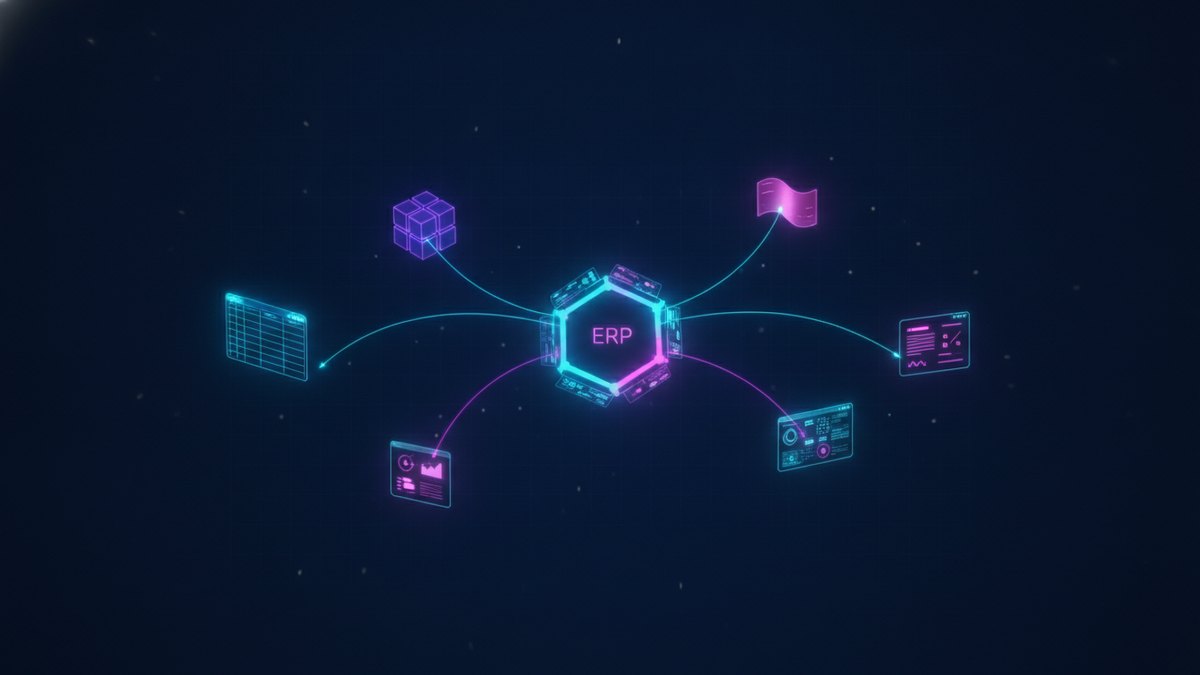
Your small business already needs an ERP when your data lives scattered across spreadsheets and systems that don’t talk to each other, you enter the same data several times, and you can’t see the real state of your operation without spending hours building reports by hand. An ERP (enterprise resource planning system) unifies sales, inventory, purchasing, finance, and more in one place, so everyone works with the same up-to-date information.
Not every company needs an ERP, and adopting one too early is as bad as doing it too late. So instead of explaining once more what an ERP is, we’re going to help you detect whether your business has reached the point where one becomes necessary. Read these signs honestly: if you check off several, it’s time to evaluate it.
Before we go through the signs, keep one idea in mind: an ERP isn’t justified by trend or by company size, but by the concrete pain you’re already feeling. If the situations below feel familiar and cost you money or time every week, the conversation is worth having. If not, it may not be time yet—and that’s fine too.
Sign 1: You enter the same data two or three times
When a sale is recorded in one place, retyped into inventory, and again into accounting, you’re paying for the same work several times. That double or triple entry doesn’t just waste hours: every time a piece of data is copied by hand, it opens the door to an error. And those errors drag from system to system until someone catches them—almost always late, and with an unhappy customer involved. An ERP captures the information once and shares it with every area, so you stop paying for the same work in triplicate.
Sign 2: Your data doesn’t match across areas
Sales says one thing, the warehouse another, and accounting a third, and nobody knows which is right. When areas work with different versions of reality, decisions are made blind and time is lost arguing over whose number is correct. The cause is almost always the same: information living in separate places. An ERP creates a single source of truth for everyone.
Sign 3: Your inventory, sales, and collections live in separate spreadsheets
Spreadsheets are great to start with, but there comes a point where they turn into a fragile puzzle: files that get duplicated, versions that overwrite each other, formulas someone broke by accident, and data only its creator understands. If your operation depends on several loose spreadsheets that have to be consolidated by hand, you’ve already outgrown what the tool can safely handle.

Sign 4: You don’t know your profit in real time
If, to know how much you’re making, you have to wait for the month-end close and for someone to gather the numbers, you’re running your business through the rearview mirror. Without day-to-day visibility of your revenue, costs, and margins, any decision—lowering a price, accepting a big order, hiring—is a gamble. An ERP gives you dashboards with the current picture of your business, not the one from three weeks ago.
Sign 5: The team loses hours building reports
When preparing the sales report, the inventory count, or the collections status becomes a ritual of copying, pasting, and cross-referencing files that takes days, you’re paying salaries to act as “glue” between systems. That time doesn’t create value; it only compensates for the lack of an integrated system. An ERP generates those reports in minutes and with reliable data.
Sign 6: You make mistakes from out-of-date information
You sell something that was no longer in the warehouse. You quote a customer an old price. You reorder material you already had. These costly mistakes usually share the same root: someone worked with a figure that was no longer current because the update didn’t reach their spreadsheet in time. With a centralized system, everyone sees the same data instantly.
Sign 7: You can’t grow without hiring more people for manual tasks
If every increase in your sales forces you to add people just to enter, consolidate, and check information, your operation isn’t scaling: it’s bloating. That’s perhaps the most expensive symptom of all, because it limits your growth and makes every new sale more costly. An ERP lets you handle more volume without the administrative work growing at the same rate.
Spreadsheets don’t fail all at once: they keep costing you hours, errors, and blind decisions until, one day, the chaos is more expensive than the solution.
When do you still NOT need an ERP?
Being honest also means telling you when to wait. You probably don’t need an ERP yet if:
- Your operation is small and simple, and one or two well-organized spreadsheets are enough without creating chaos.
- Your areas are few and coordinated, with no problems of mismatched data.
- You don’t feel the pain of any of the signs above. If none of the above rings true, don’t fix what isn’t broken.
Adopting an ERP too soon can be an investment and a complexity you don’t need yet. The key is that it responds to a real pain, not to a trend.
In summary
An ERP isn’t for every small business, but it is for the one that has outgrown its tools: double entry, mismatched data, scattered spreadsheets, no real-time visibility, hours lost on reports, mistakes from stale information, and growth that only holds up by hiring more people. If you checked off several of these signs, it’s time to evaluate it seriously, whether custom-built or an off-the-shelf solution depending on your case.
At Normandia Web we help you first diagnose whether you truly need it and then choose the right path, without selling you a giant system you won’t use. If you identified with several signs, let’s talk and figure out together which solution fits your operation.
Ready to put it to work in your company?
Tell us what’s costing you time, money or control. We’ll help you figure out where to start.
Start your consultation →