
Nearshore vs offshore: how to choose your software development model

Nearshore means hiring a software development team in a nearby country whose time zones overlap with yours; offshore means doing it in a distant country where the hours barely line up. The difference isn’t only geographic: it changes how you communicate, what it really costs, and what risks you take on.
If you’re weighing whether to build your software with an outside team, this guide gives you the criteria to decide without making the most common mistake: choosing by the hourly rate and finding out too late that rework ate the savings.
What are nearshore and offshore?
Both are forms of outsourcing (building software outside your own company), and the key difference is distance:
- Nearshore: a nearby country, usually within 0 to 3 hours of time-zone difference. For the U.S., that’s Latin America —Mexico, Costa Rica, Colombia, Argentina.
- Offshore: a distant country, with an 8 to 12 hour gap. For the U.S., that’s typically Asia or Eastern Europe.
Time zone: the difference you feel the most
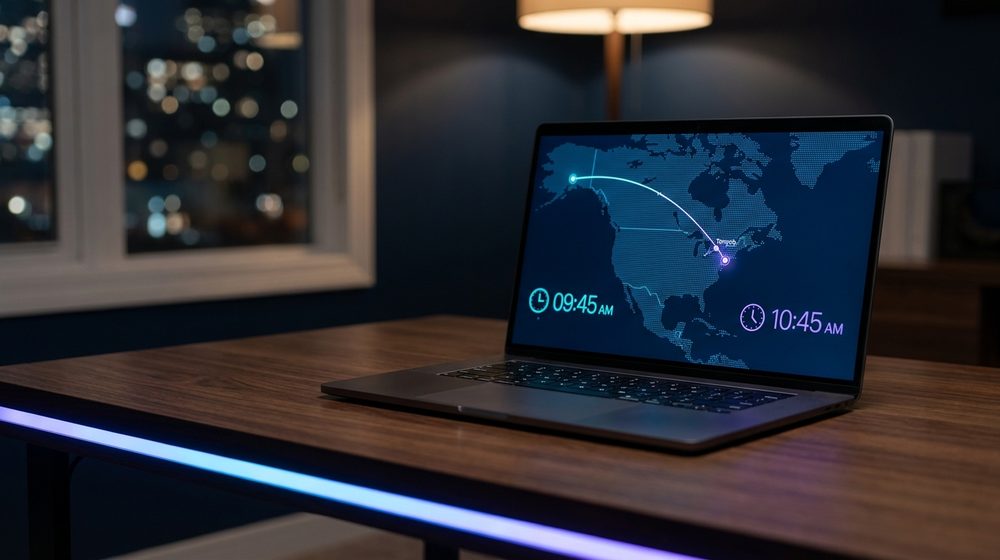
This is the factor that hits day-to-day work hardest. With a nearshore team you work in hours that overlap with yours (6 to 8 hours of overlap), so a question gets answered in a five-minute call. With an offshore team, that same question asked mid-morning may not get a reply until the next day: feedback cycles stretch to 24 hours and the project moves in fits and starts.
Cost: is offshore really cheaper?
On the hourly rate, offshore is usually the lowest. But the real cost isn’t the rate —it’s what you end up paying for the whole project. Offshore savings can dissolve into high staff turnover, misunderstandings that force rework, and weeks lost to slow feedback loops.
Nearshore typically costs 30% to 60% less than a local U.S. team, with far less communication friction. In practice, for projects that require back-and-forth, the total cost often comes out ahead.
When does each one make sense?
There’s no absolute winner; it depends on your project:
- Nearshore fits when the project requires frequent communication, agile methodologies, constant iteration or regulatory compliance. It’s the model for building something custom alongside a team.
- Offshore can work for well-defined, documented work that’s resource-heavy, where a clear specification replaces real-time conversation.
Choose by total cost and by how much conversation your project demands —not just the hourly rate.
Mexico as a nearshore option for the U.S.
For a U.S. company, Mexico is one of the best nearshore options: 6 to 8 hours of overlap with U.S. business hours, over 700,000 software engineers, the USMCA framework, and tech hubs like Guadalajara. You work in real time, at competitive cost, without the cultural distance of a team on the other side of the world.
Frequently asked questions about nearshore and offshore
What’s the main difference between nearshore and offshore? Proximity and time zone. Nearshore is a nearby country with overlapping hours (0 to 3 hours’ difference); offshore is a distant country where the hours barely coincide (8 to 12 hours).
Is nearshore more expensive than offshore? The hourly rate is usually a bit higher, but the total project cost often comes out better: less rework, less turnover, and faster feedback cycles.
Is Mexico nearshore for the U.S.? Yes. Mexico has 6 to 8 hours of overlap with U.S. business hours, which allows real-time collaboration, plus the USMCA framework.
Which model should I choose? If your project demands frequent communication and iteration, nearshore. If it’s a well-defined, documented block of work, offshore can work.
Take the first step with the right model
Before picking a vendor, get the decision straight:
- Measure how much communication your project demands. The more iteration, the more the time zone matters.
- Calculate the total cost, not the rate. Add rework, management, and lost time.
- Ask for real cases. A partner with projects in production lowers the risk.
At Normandia Web we work nearshore from Mexico: in your time zone, at competitive cost, with real cases in production and the code 100% yours. If you want to build custom software without the friction of offshore, tell us what you need.
Ready to put it to work in your company?
Tell us what’s costing you time, money or control. We’ll help you figure out where to start.
Start your consultation →