
Cybersecurity for small businesses in Mexico: where to start

Cybersecurity for a small business in Mexico starts with the basics done well: strong passwords with two-factor authentication, tested backups, updated software, staff trained against phishing, and a response plan—not with buying expensive tools. Most of the attacks that hit a small business don’t exploit sophisticated technology, but oversights you can fix with order and discipline.
If you own a small business, it’s easy to think cybersecurity is a topic for big corporations. It isn’t. Your business holds customer data, banking access, emails, and systems that, if they go down or leak, cost you money and trust. The good news is that taking the first steps doesn’t require being an expert. This article, written for the Mexican market, shows you where to start without falling into fear or unnecessary spending.
How does the cybersecurity framework stand in Mexico?
The regulatory landscape in Mexico is fragmented: there’s no single cybersecurity law, but several regulators and scattered rules by sector. The Federal Cybersecurity Law remains a proposal in 2026, still unapproved. For you, this means you can’t wait for “the law to tell you what to do”: the responsibility to protect your business is yours starting today.
And small businesses are, in general, poorly prepared. According to the company Tantius, only 4 out of 10 small businesses in Mexico have a formal incident response plan. It’s not an official government statistic but an industry figure, yet it matches what’s seen in practice: many businesses only react after something goes wrong. Starting earlier puts you ahead of most.
Why would a small business be a target if it’s small?
Precisely because it’s small. Many owners believe “we’re too small to be attacked,” and that’s exactly the thinking attackers exploit. Attacks on small businesses are rarely personal: they’re automated, casting wide nets looking for businesses with weak defenses, regardless of size.
A small business usually has valuable data and, at the same time, less protection than a large company. That makes it a convenient target: the attacker’s effort is low and the probability of success is high. The upside is that, with a few basic layers, you stop being the easy target and the automated attacker moves on to someone less prepared.
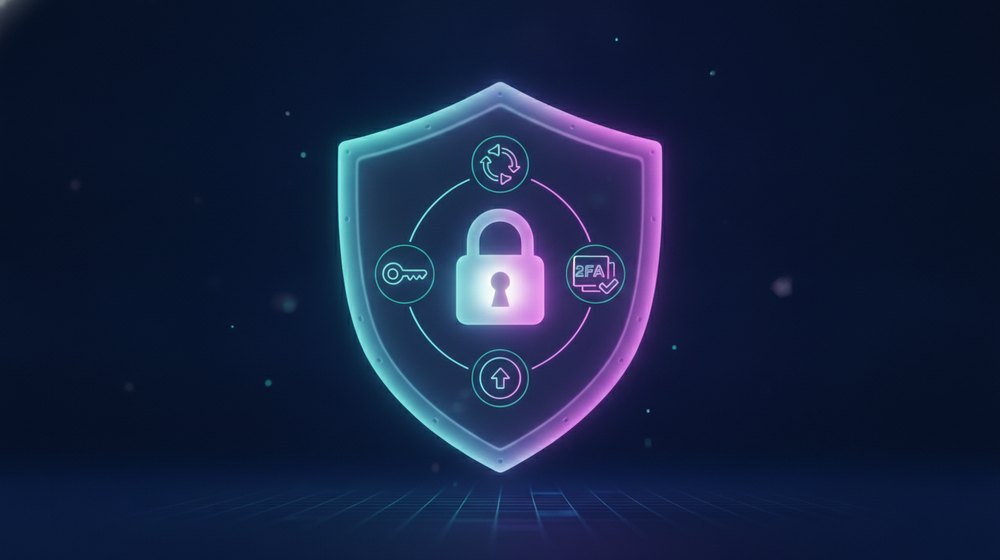
What are the first defenses I should put in place?
These are the highest-impact layers for their cost, almost all free or very affordable. If you have none of them, this is your order of priority.
- Strong passwords and two-factor authentication (2FA). It’s the most cost-effective measure there is. Use long, unique passwords per service (a password manager helps) and turn on the second factor for email, banking, and key systems. Even if a password is stolen, 2FA stops the attacker.
- Tested backups. Having copies isn’t enough: you have to test them. A backup you never restored may be corrupt on the very day you need it. Automate them and verify from time to time that they can truly be recovered.
- Up-to-date software. Outdated systems, apps, and plugins are the favorite door for automated attacks. Enable automatic updates wherever you can.
- Phishing training. Most breaches start with a deceptive email that someone on the team opens. Teach your people to distrust suspicious links and attachments; a short, periodic talk makes a big difference.
- Access control. Each person should have only the permissions they need, and those should be revoked when someone leaves the team. Avoid shared accounts.
- A response plan. Even a simple one: who to notify, what to disconnect, and how to recover if something happens. Having it in writing saves you hours of chaos.
And after the basics, what comes next?
Once those layers are covered, cybersecurity becomes a habit, not a project. The idea isn’t to reach perfection, but to improve steadily and in proportion to the size of your business.
Perfect security doesn’t exist; sufficient security does, and for a small business it’s achieved through consistency, not spending.
The next steps depend on your operation: better protecting your website and online store, segmenting your network, encrypting sensitive information, or hiring a security review if you handle delicate data. What matters is not stopping after the first effort: review your defenses at least once or twice a year, like someone checking the locks on their shop.
In summary
Cybersecurity for a small business in Mexico doesn’t start with expensive tools, but with the basics done well: strong passwords with 2FA, tested backups, updated software, staff trained against phishing, access control, and a response plan. The regulatory framework is fragmented and laws are behind, so the initiative is yours. With a few layers you stop being the easy target.
If you’d like an honest review of how protected your business is today and a realistic plan for your size and budget, at Normandia Web we can help you secure your website, systems, and data without selling you hype or scaring you needlessly.
Ready to put it to work in your company?
Tell us what’s costing you time, money or control. We’ll help you figure out where to start.
Start your consultation →