Chatbot vs. AI agent: what does your business really need?
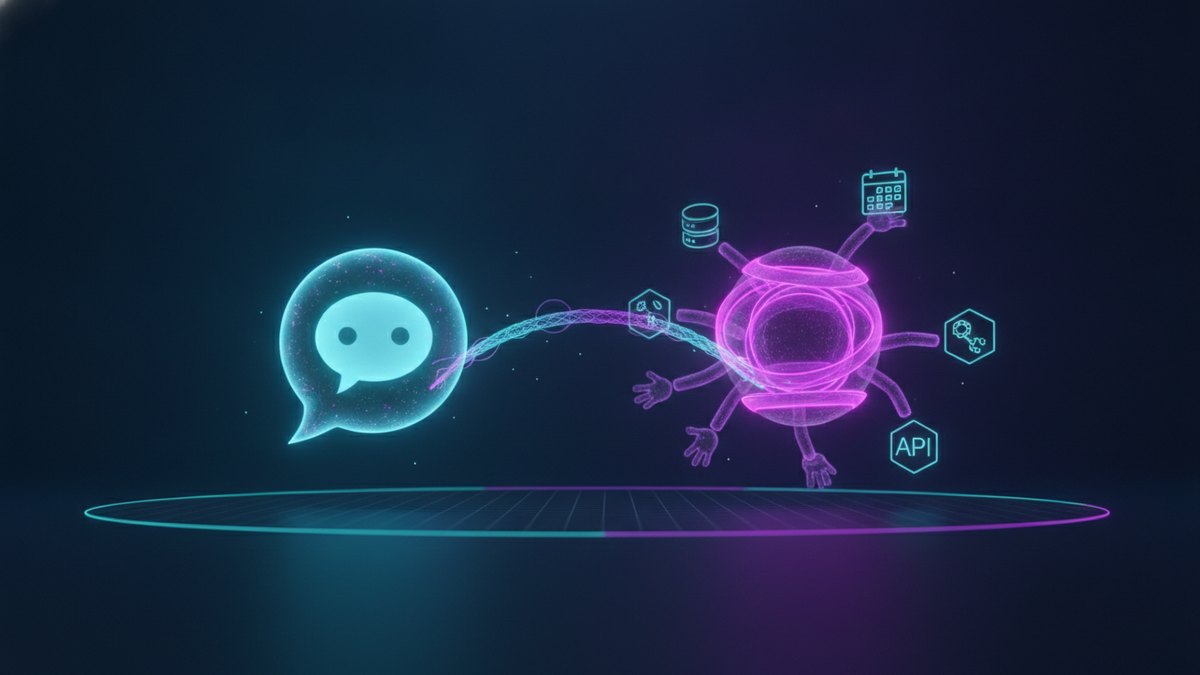
A chatbot answers questions by following a script; an AI agent carries out complete tasks from start to finish, using your real tools (databases, spreadsheets, APIs, PDFs) and adapting as it goes. Both use artificial intelligence, but they solve problems of very different sizes. Choosing wrong means paying too much for something you don’t need, or falling short with something that can’t do the job.
In 2026 the word “agent” is everywhere, and much of the marketing uses it as a synonym for chatbot to sound more advanced. Not here. If you own a business and you’re weighing whether to automate with AI, understanding this difference saves you money and disappointment. Let’s break it down, no jargon.
What is a chatbot, and what is it really good for?
A chatbot is a conversational assistant: it receives a message and returns a reply. Modern ones, powered by language models, understand what you write and respond naturally, but their job ends with the conversation. They answer, inform, guide.
For a great many small businesses, that’s enough. A good chatbot can:
- Answer frequently asked questions around the clock: hours, location, payment methods, policies.
- Point visitors to the right product or page.
- Capture a prospect’s details and hand them to your team for follow-up.
- Screen a first contact before a person steps in.
If your need is “have someone always answer the same things, well and fast,” a well-built chatbot is affordable, reliable, and sufficient.
What makes an AI agent different?
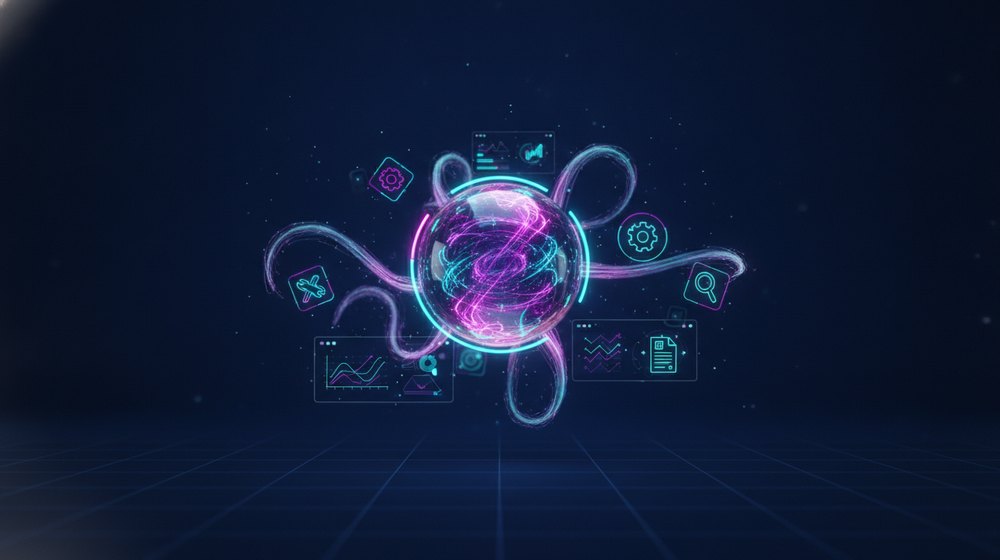
An agent doesn’t just talk: it acts. Instead of telling you “to change your order, log into your account and…,” an agent can log in, look up the order in your system, apply the change, and confirm it’s done. The key difference is that an agent uses real tools and chains several steps together to complete a goal.
This sets it apart from traditional automation (the well-known RPA, which mimics clicks and keystrokes). RPA is rigid: if the screen changes or the case falls outside the script, it breaks. An AI agent, by contrast, reasons about each step and adapts when something doesn’t fit, without being reprogrammed for every exception. It can read a PDF, look up a figure in your database, update a spreadsheet, and draft an email, all as part of a single task.
When is a chatbot enough, and when is an agent worth it?
Choose a chatbot when the work is mainly to inform or converse, and the actions (creating the order, issuing the invoice) are handled afterward by a person. It’s cheaper to build, easier to maintain, and more predictable.
Consider an agent when the task involves several steps and touching your systems: processing requests end to end, reconciling information across sources, generating and sending documents, or coordinating a flow that eats hours from your team today. That’s where an agent stops being a luxury and becomes an investment with a clear return.
A simple way to decide:
- Do you only need to answer? Chatbot.
- Do you also need it to do things in your systems? Agent.
- Does the task have many exceptions and shifting data? Agent (rigid RPA would struggle).
- Is the process simple, stable, and low-risk? Start with the lighter option.
An honest caveat almost no one tells you
Autonomous agents are the most promising technology of the moment, but also the most immature. In production, their reliability is still limited: they can make mistakes, misread an unusual case, or “hallucinate” a fact. So anyone selling you a fully autonomous agent that runs with no oversight is selling you smoke.
The golden rule doesn’t change: AI proposes and executes, but a human reviews and approves before anything reaches the customer or touches money.
The sensible approach is to start with the agent under supervision —let it prepare the work and have a person sign off— and expand its autonomy only for the tasks where it has already proven reliable. That way you capture the savings without exposing yourself to a costly error.
And the cost? A difference worth being clear about
The price gap between the two is real and it makes sense. A chatbot is cheaper to build and maintain because its job is bounded: it converses and, at most, looks up information. An agent costs more because it has to be securely connected to your systems, its boundaries carefully defined, and the right oversight set up around it.
That’s why the smart order for most small businesses is from less to more. Start by solving conversation and FAQs with a chatbot; once you know your flows well and you’re clear on which process is costing you the most hours, make the leap to an agent for that specific process. That way you invest where the return is measurable, instead of paying for autonomy you don’t yet need. A good technology partner helps you find that point without overselling you.
In summary
A chatbot is the perfect entry point to automate support and FAQs; an AI agent is the leap to automate whole processes that drain your team today. Neither is “better” in the abstract: the right choice depends on which problem you want to solve and how much risk the task can tolerate.
At Normandia Web we don’t start from the hype, but from your operation: we review which tasks cost you the most time, decide with you whether a chatbot or an agent fits, and build it on your own data with the right level of human oversight. If you want to know what fits your business, let’s talk.
Ready to put it to work in your company?
Tell us what’s costing you time, money or control. We’ll help you figure out where to start.
Start your consultation →